
Keynote by Dr. Anne Luther & Eiloghosa Oghogho Obobaifo
The histories of museum collections are often embedded in documentation systems that were created within particular institutional, colonial, and disciplinary contexts. For objects looted from the Kingdom of Benin during the British invasion of Benin City in 1897 and subsequently dispersed across museums and collections worldwide, these records can contain essential information while also reflecting significant gaps, silences, classifications, and perspectives.
This keynote introduces Digital Benin, an international research and technology project that brings together information on more than 5,300 objects from 139 institutions in 21 countries, reconnecting dispersed collections with archival sources, provenance information, oral histories, and knowledge from Benin. We will explore how the project approaches museum documentation not simply as a process of collecting and standardising data, but as an opportunity to reconsider whose knowledge is represented and how collections are described.
A central part of this work is Ẹ̀yọ̀ Ọ̀tọ̀, an Edo-controlled vocabulary developed through research and collaboration in Benin City. It provides Edo terminology and conceptual categories for describing Benin heritage, creating a framework in which local knowledge can shape the structures of digital documentation rather than being added only as supplementary information.
The keynote will also introduce the open-source tools developed through Digital Benin, including ỌKPAN, a platform for connecting and enriching museum data, and LOUPE, a provenance research tool designed to document the histories, sources, and transformations through which information about an object is assembled. Together, these tools explore how digital infrastructures can make dispersed documentation interoperable while retaining the provenance of the information itself.
By bringing together the project, Ẹ̀yọ̀ Ọ̀tọ̀, and these digital tools, the keynote will consider how museum documentation can respond to historical legacies while creating more collaborative, multilingual, transparent, and locally grounded approaches to collections information.
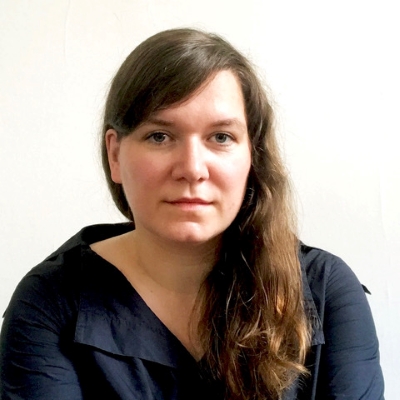
Dr. Anne Luther is a digital heritage specialist, digital humanities scholar, and founder of the Institute for Digital Heritage. She is the Principal Investigator and Project Lead of Digital Benin, an international research and technology project that brings together dispersed museum collections, archival materials, oral histories, and other documentation relating to the cultural heritage of the Kingdom of Benin looted during the British invasion of Benin City in 1897 and subsequently dispersed among collections worldwide. Since 2020, she has led the project from Hamburg and Philadelphia, coordinating an interdisciplinary team working across Nigeria, Germany, the United States, the UK, France, and other countries.
Luther’s work focuses on the intersection of technology, design, humanities research, and cultural heritage. Her projects explore how digital infrastructures and data can connect dispersed collections, make provenance and historical context more visible, and create new forms of access to cultural heritage. Through Digital Benin, she has overseen the development of digital tools and methodologies for connecting museum data internationally and incorporating local knowledge and historical context into digital collections.
Before founding the Institute for Digital Heritage, Luther was a researcher at the Technische Universität Berlin (2017–2020), where she worked with Bénédicte Savoy’s Translocations research cluster. From 2014 to 2017, she was Research Manager at the Center for Data Arts at The New School in New York. In 2021–2022, she was a Fellow at the Price Lab for Digital Humanities at the University of Pennsylvania. She holds a PhD from Central Saint Martins, University of the Arts London (2015).
Luther’s work brings together digital humanities, museum research, provenance, and questions of restitution and cultural heritage. She regularly speaks internationally on digital heritage, museum data, digital provenance, and the development of digital infrastructures for cultural institutions.

Eiloghosa Oghogho Obobaifo is a Nigerian anthropologist and researcher specialising in cultural heritage, museum studies, and the restitution of African cultural heritage. She has been a researcher with the Digital Benin project at the Museum am Rothenbaum (MARKK) in Hamburg since 2020, where she works from Benin City on the documentation, digitisation, and interpretation of Benin’s dispersed cultural heritage.
Her work for Digital Benin has involved extensive research in Nigerian museums and archives, including the National Museums in Benin City, Lagos, and Owo. She has collected, documented, evaluated, and transcribed museum records, while also contributing to research on oral traditions and local knowledge relating to Benin objects and their histories. She was instrumental in identifying Edo names and categories for groups of historical objects and, together with colleagues at the University of Benin, contributed to the development of the platform’s foundational Edo vocabulary, Ẹ̀yọ̀ Ọ̀tọ̀.
Obobaifo’s research extends beyond museum documentation to questions of cultural memory, restitution, historical accountability, and the role of communities in shaping how cultural heritage is recorded and represented. She has worked with artists, cultural practitioners, scholars, and community members in Benin City and has contributed to research on the return of Benin objects, including through Open Restitution Africa.
She holds an MSc in Sociology and Anthropology from the University of Benin, Benin City. Her work brings together anthropological research, museum documentation, local knowledge, and digital technologies to create more context-rich and locally grounded approaches to African cultural heritage.